Search COR

Shop COR


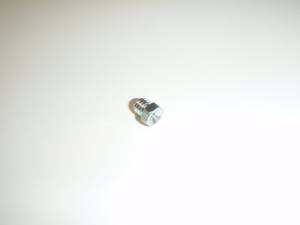
YUKON SUPER U-JOINT D44 Kit YP SJ-297X-203

YUKON SUPER U-JOINT D44 Kit YP SJ-297X-203

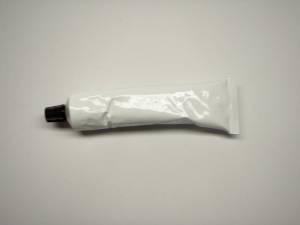
ONE PAIR OF YUKON SUPER ALLOY U-JOINTS, GREASE AND GREASE GUN

YUKON SUPER JOINT

Hello, my name is Carl Jantz and I designed and tested the super joint.
I�d just like to set the record strait for those who think the Yukon super joint is just a cheap copy of other extreme joints on the market today. I have been working on a better U-joint since I broke my 1st front axle U-joint in 1978. After trying every brand, I eventually used Spicer�s, but in the old bronco they were the 260x joints, eventually as tires got bigger and several U-joints later, I stumbled on the fact that some Dana 44s used 297x (now 760x) u-joints and bored out my axles to fit. Then of course the ears tore off or stretched, so I built them up with a stick welder and 7018 welding rod. This worked very well for years, then along came still bigger tires and extreme 4 wheeling. I looked at modifying Dana 60 crosses to fit into the D44 caps around 1985 but decided no one would be willing to pay the price of buying 2 U-joints and then machine work to make them work, plus brass bushings that would eventually deform under the extreme pressure exerted upon them. (I didn�t know about beryllium bronze at that time). So I built my 1st Dana 60 5 lug front (1986) end and went happily 4 wheelin with 18/44�s for years. Then I went to the 1st NWRCA rock crawl at Vantage Washington and realized that there was a real need for a stronger joint and that a few people would be willing to pay for them. By this time I had worked a Boeing in R & D and had worked with Ionic coatings to drill through Titanium. I figured if It made the drills last significantly longer and since NASCAR was using Ionic coatings on the ring and pinions with great success to reduce friction that they might work on the u-joint crosses to avoid using a bearing. To learn more about Ionic coatings to go to www.Ionbond.com. (Note Ford Model A cars used no needle bearings in there U joints, just 140wt grease and hardened caps on hardened crosses, but then they were only dealing with 40 hp.)
So I had a drill bushing company make some 4340 hardened bushings for me that press fit over the 297X crosses and fit into the caps to replace the needle bearings, and then set up a design of experiments to test various greases and Ionic coatings.
I first used one grease with several coatings to find the best Ionic coating. Then I used one Ionic coating to test several greases. The last test went something like this. Installed 2 Joints into front end of diesel suburban with 4 kinds of greases, one type of grease in 2 caps. Then I pulled out the rear drive line and with my jeep on the trailer behind the suburban went on a 1200 mile road trip including Stevens pass, Snoqualmie pass and White Pass. (Getting started in front wheel drive was a pain sometimes) I then inspected the joints and found out two things. All of the greases were just fine, AND there was water in the joints. Now this was all highway driving in 70 plus weather except one � hour rain storm, I figured out that as the cold water sprayed up on the u-joints they cooled down creating an internal suction that pulled the water inside the joints, hence they now have pressurized grease reservoirs.
So on to finally test the greases, I chained the rear end to a tree with the front end on dry pavement, and burned a set of tires to the cords in 45 minutes of smoke. All the greases failed except one, and it looked just like I had just assembled the joint and never tested it at all. The grease is an Aircraft spec anti-seize. All automotive greases, even the synthetics never even came close to this stuff.
So with parameters set it was time to combine all factors and do a real world test. 16 joints were made from billet and tested at Cedar City in the April of 2002 at the U-roc crawl. There were no failures and, all of the rigs using the joints placed in the top ten at the event. So onto production, attaining a patent and working with a distributor, and now they are finally here. We really worked on having a product that gives superior performance at a reasonable price. If you would like to see a little more please visit my website for an install. www.jantz4x4.com


IS THERE A WARANTEE?

I will warrantee the U joints purchased from me for 1 year provided if one should break you pull the axle immediately and without cleaning anything send the entire assembly to me. I need to do a proper failure analysis, for further product improvements. Also most 44 front ends only have one steering stop on the front of each steering knuckle, thus with tie-rod flex or looseness and the Ackerman principle the opposite knuckle of where the steering stop is can actually steer a several degrees farther. So steering stops must be installed for both directions on each knuckle to prevent the ears of the axles from running into the yokes of the axles. Any binding of the ears will loosen up the ears and destroy the u-joint caps quickly, VOIDING A WARRANTEE. After installing stops, paint the axles and after a day 4wheelin verify that there are no rub marks in the yokes. I found that my stops were set for the max turning of a stock axle ears and when I put in aftermarket axles I was getting rubbing because the aftermarket axle has thicker ears, so I did a little grinding inside the yokes and redid my steering stops. Then I went 4wheeling again and to my surprise I still had rubbing in the yokes. What I found was that one of the stock steering stop bolts had bent sideways, allowing too much steering angle. So a little reinforcement was necessary.

WHAT ABOUT LONGEVITY?

I only have the data from the 1200 mile road test with no appreciable wear at this point. However I would like to present some anecdotal evidence. The Ford Model A had a drive line u-joint that did not have needle bearings, it just was bathed in 140W oil, and plenty of them are still running on the road today. The Steel, heat treatment, & surface finish on the super joint is far superior to the Model A�s. Combined with the superior lubrication supplied with the joint you will have many years of service life. Also at this point I have not needed to warrantee any joints so far.

CAN I PUT THESE IN STOCK AXLES?

Yes you can. But should you? I give the following guidelines:
OK in stock axles for tires 35� and smaller (except Boggers). Because any larger tire will probably either break the stock axle or stretch the ears out around the u-joint cap and then the caps will be forced out and ruin both the axle and the U-joint. So if you want a set of U-joints in your trail rig or hunting rig that will last a life time go ahead and install them in your stock axles. However if you are running big tires in the rocks then you need to upgrade to alloy axles & alloy joints.
35� is a suggestion, there are degrees to everything, for example 36� swampers, stock axles, super joints and a posi front end will probably last for years with one drivers style of driving, However The same tire with a locker instead of a posi, and a lead foot, is just a matter of time before something gives way.

HOW ARE THE CAPS MADE?

The caps are made of 4340, and are coined, that is stamped from a flat sheet of stock in a cold forging process which makes the grain structure incredibly strong. The thickness in the end has been maximized to just clear the hole thru the spindle.

WHAT IS THAT GOLD COLOR, ARE THEY BRASS PLATED?

That is the Titanium Nitride coating. It is about 80 Rockwell C. In simple terms its a dry lubricate wear coating about 25% harder than a file. The U-joint crosses are forged out of 4340 and heat treated to 55 Rockwell C. That is just a little less hard than a file. I could have made them harder but then toughness would be sacrificed.


OK here comes some tech!
The question is what sees more stress, under a torque load, the Axle or the U-joint?
We will look at calcs for a 30 spline axle, a stock dimensioned joint, and Super joint.

According to the Moser Engineering web site; a 30 spline axle is rated at 6200 ft-lbs Torque. Using the following formulas from the machinery design handbook we can see what the stresses are in each component under the same load.

To solve for stress in the axle use:

Stress = (16T) � (πD^3)
where T = Torque is in inch-lbs & D is diameter in inches at 1.3 and (^3) means cubed

multiplying 6200 x 12 to get inch lbs and solving for stress

Axle stress = (16 x 6200 x 12) � (π x 1.3 (3)) = 173,000psi. This is under the yield point of most high alloy steels and gives a margin of safety for fatigue and impact resistance over time.

To solve for stress in the trunion you have to break the U-joint apart into its components and the best formula I�ve found for this is for a short shaft in bending. This formula combines both the shear forces and the bending stress which together are shown to be 30 percent more than either alone. Thus:

Stress in trunion= (16F) � (3 π D^2)
Where D=the diameter of the trunion in inches; .773�stock and .937� Super
And where F= shear force in lbs. So to find the Stress in the trunion we must 1st find the shear force.

Since Torque is force multiplied by length, rearranging gives the formula F=T� L
L is the distance from the center of the u-joint to the shear plane where they typically break. The super joint is wider than a stock joint in this critical dimension. In a Stock joint L= .680� but in a Super Joint L= .795� Also since the torque is transferred by 2 trunions then the torque load is only 3100 ft-lbs on each trunion. Also to keep units the same we must multiply 3100 ft-lbs x12 to make in-lbs. So the shear force each trunion sees is:

F stock= T�L =(3100 ft-lb x (12)) � .680 = 54,700 lbs
F Super = �L =(3100 ft-lb x (12)) � .795 = 46,000 lbs

Note that in the Super Joint, just moving the shear planes out .115� lessens the effective force required to transmit the same torque significantly since it acts through a longer lever arm. Equating to a 17% drop in stress.

Knowing the forces acting on the trunions we can now calculate the stress in the shear plane of each U-joint.

Trunion Stress Stock = (16F) � (3 π D^2) = 16(54,700) � 3 π (.773)^2= 155,000psi.
Trunion Stress Super= 16(46,000) � 3 π (.937)^ = 90,400 psi.

Let�s review; under a 6200 ft-lb load
Axle stress = 173,000psi
Trunion stress stock = 155,000 psi (note this is less than axle stress)
Trunion stress Super = 90,400 psi.

So the next question is why do the stock joints break when they are stressed less than the axles, well the best formula I found after much research is that because of the angle at full steering the effective lever arm length to transfer the torque is reduced causing 30 % more stress on the trunion.
So Stock trunion stress is really: 155,000 psi x 1.3 (adding 30 percent) = 201,500psi.
And the Super joint stress is 90,400 psi x 1.3 = 117,500 psi.

So lets compare, under the same 6200 ft-lb load the axle see�s 173,000 psi stress and the Super Joint see�s only 117,500 psi stress.
The super Joint is made of 4340 tempered to a yield point of 200,000 psi. So under full load we are 59% under the yield point of the material, giving us a 41% safety factor. Some people have asked me why I didn�t go with 300M steel or Vasco Max. Both of these steels are stronger but also drive the price of materials and production higher. Other u-joints use 300M but a smaller crossectional diameter, and based on that diameter the material would have to be 40% stronger to withstand the same torque my joints will take. I don�t believe that 300M is 40% stronger than 4340 but it does have better fatigue and shock resistance than 4340 so only time will tell what will break when you put the pedal to the metal!

Price: $370.27
Qty:
Click on image to zoom »

Product Details »
  • # YP SJ-297X-203
  • 5.0 lbs.
  • In Stock
  • New

News

COR Info

Phone: 563-583-5363
M-F: 7am - 3:30pm CST

Have a Question?
Contact Us | Email

SEMA Logo

Click to verify BBB accreditation and to see a BBB report.

MasterCard Visa
AMEXDiscovereCheckPayPal Logo

COR Support

Ebay Button  4x4 Site  Bronco Zone

Eagle - We Support Our Troops  Support Our Troops  POW MIA Flag